

Reading time: min
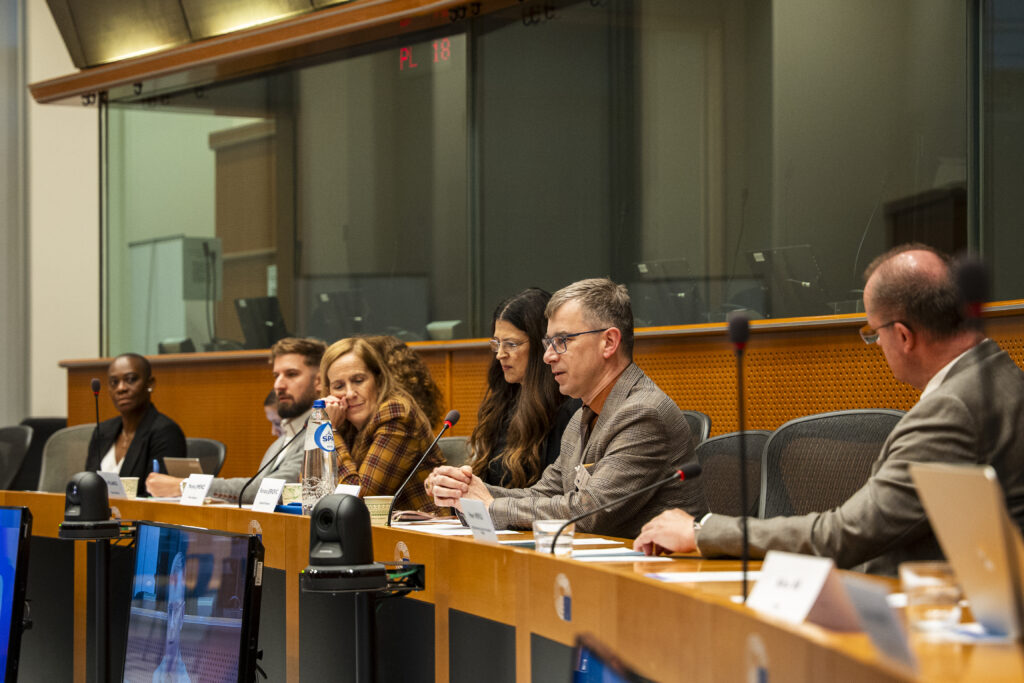
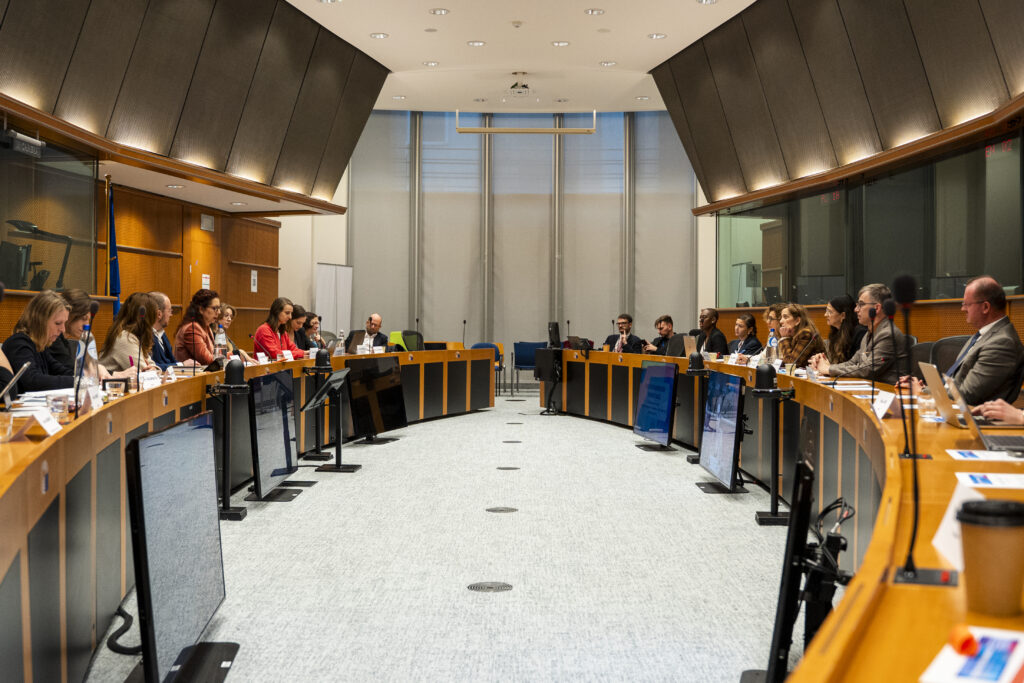
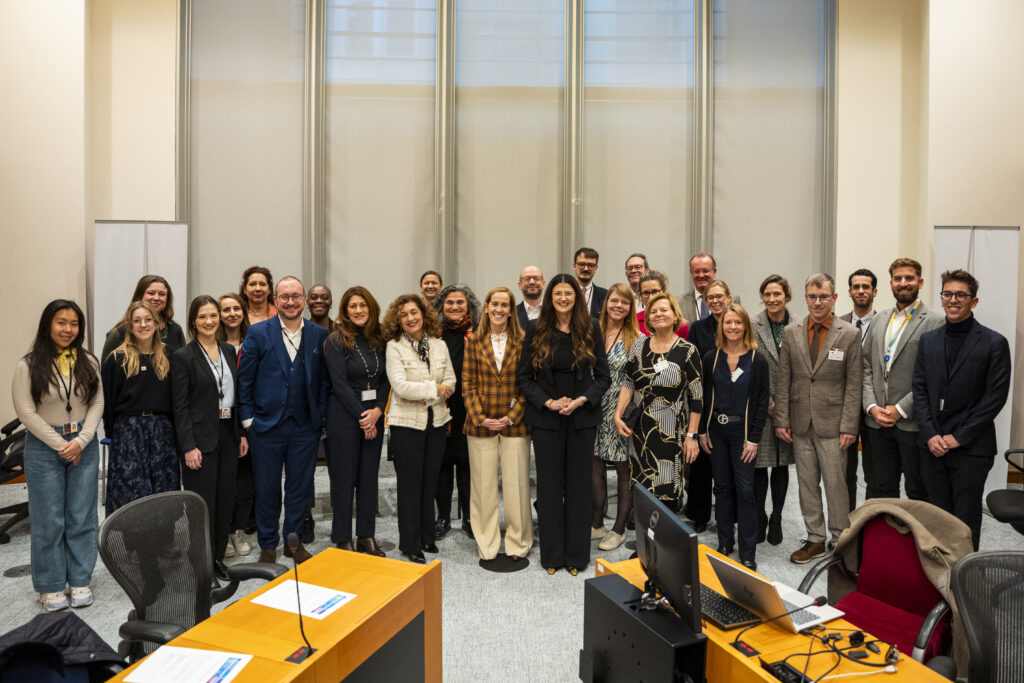
On 4 December, our Chair, Maciej Smiechowski, took part in the multistakeholder roundtable discussion “Together for Tomorrow: Addressing Europe’s Fertility Challenge” at the European Parliament, hosted by MEP Romana Jerković. The event brought together policymakers, experts, and patient representatives to explore how Europe’s long-standing demographic challenges intersect with EU health and equality policies on fertility treatment.
A central theme of the intervention was the widely documented fertility gap – the difference between the number of children people intend to have and the number they actually have. Narrowing this gap should be the objective of any sensible demographic policy. However, this must never come at the expense of reproductive autonomy. Demographic targets cannot be achieved through pressure, coercion, or alarmist narratives. Instead, Fertility Europe firmly advocates a rights-based approach, encapsulated in its slogan: “Everybody has the right to try.”
Empowering people to have as many children as they wish requires addressing involuntary childlessness for a broad range of reasons, including not only clinical infertility, but also ensuring access to fertility care for same-sex couples, single women, and those postponing parenthood due to financial insecurity.
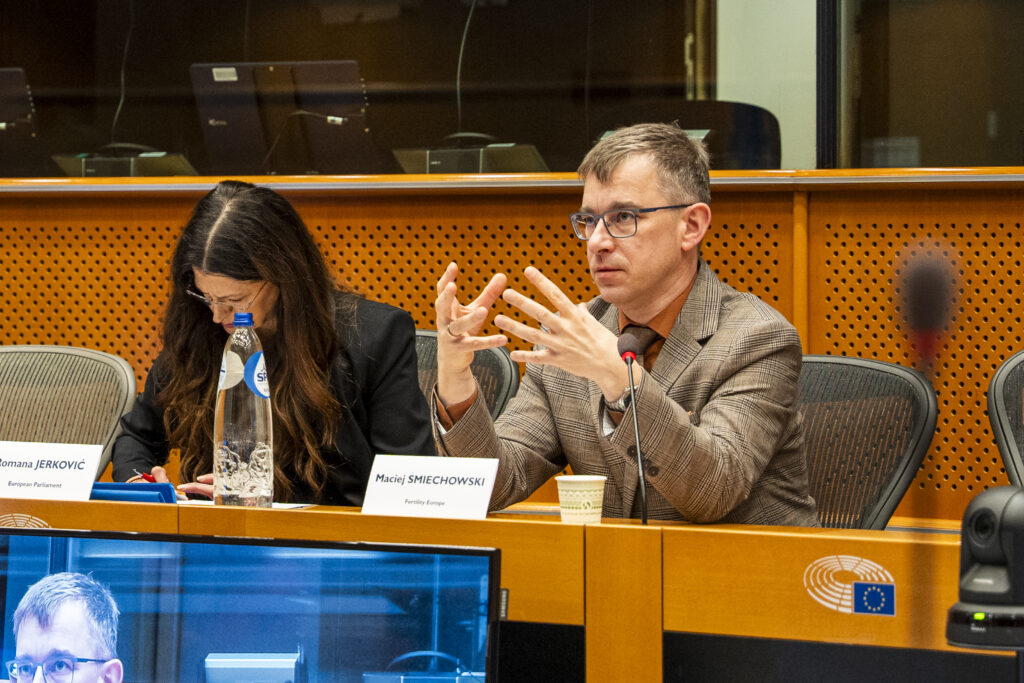
Our Chair underlined that fertility treatment is often physically, mentally, and financially demanding. When treatment is not adequately reimbursed through public health systems, the financial burden alone can force people to abandon their reproductive plans.
To guarantee fair and equal access to fertility treatment, Maciej called for the removal of financial barriers through comprehensive fertility care and sufficient public funding. Reference was made to the European Atlas of Fertility Treatment Policies, co-authored by Fertility Europe, which reveals stark inequalities across the continent. While some EU countries are moving closer to providing equal access, many still fail to recognise infertility as a disease or provide treatment within the public health system – conditions that widen the fertility gap.
Our Chair also highlighted the impact of fertility treatment on working life. Frequent medical appointments, precisely timed procedures, and strict medication schedules often lead to work absences and can hinder professional development.
This is why Fertility Europe has chosen Fertility@Work as its annual theme for 2026, advocating for fertility-friendly workplaces that offer flexibility, dedicated leave, and psychological support. Mental health counselling, Maciej emphasised, should be a standard and publicly funded component of fertility treatment.
Another key message concerned inclusive decision-making in fertility care. Equal involvement of men in fertility-related decisions remains an overlooked aspect of reproductive rights. While always respecting women’s bodily autonomy, men should be actively included in family planning and treatment decisions.
Addressing male-factor infertility more effectively would not only support men but also reduce the disproportionate medical and emotional burden often placed on women. Inclusive policies, workplace flexibility, and mental health support should therefore extend to men as well.
Finally, Maciej stressed the importance of timely interventions and fertility education. Delays, long waiting times, and a lack of accurate information can waste precious reproductive years.
Fertility education should be introduced early, ideally at the secondary school level, to equip young people with factual knowledge about reproductive health. Findings from the FActs! The Game, our fertility awareness project developed with ESHRE, show significant gaps in teenagers’ understanding of fertility – gaps that must be addressed to enable informed, evidence-based reproductive decisions.
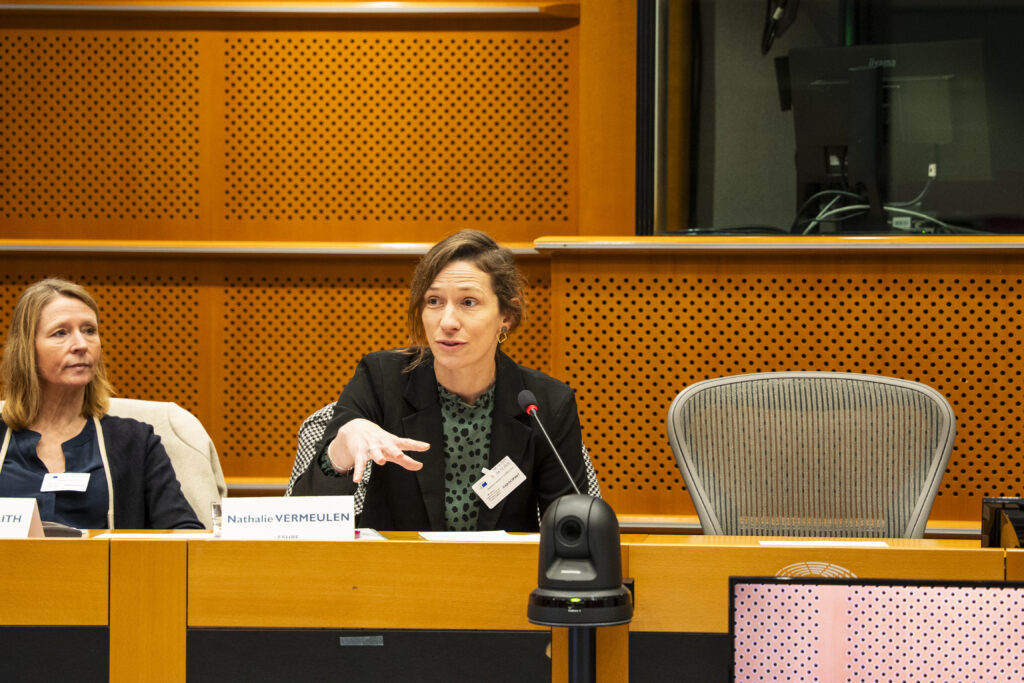
In the address, Maciej represented infertility patients, emphasising the role of Fertility Europe in giving a voice to patients through the continuous input of its member societies. Maciej also highlighted Fertility Europe’s close cooperation with the European Society for Human Reproduction and Embryology (ESHRE), represented at the event by Nathalie Vermeulen. This partnership connects patient advocacy with medical and scientific expertise in medically assisted reproduction, strengthening evidence-based policy recommendations.
In closing, Maciej noted with appreciation that all panellists shared a common vision: a rights-based, inclusive approach to fertility care that avoids pressure and instead supports individuals in exercising their reproductive autonomy.
Europe’s demographic challenges, our Chair concluded, can only be met through policies that combine equal access to care, public funding, workplace adaptation, gender equality, mental health support, and education, creating a Europe where everyone truly has the right to try.
Copyright © 2026. Fertility Europe. All rights reserved.
Design & Development: Plavi Pixel 2025.
Join our newsletter to receive heartfelt stories, expert insights, and updates from Fertility Europe.