

Reading time: min
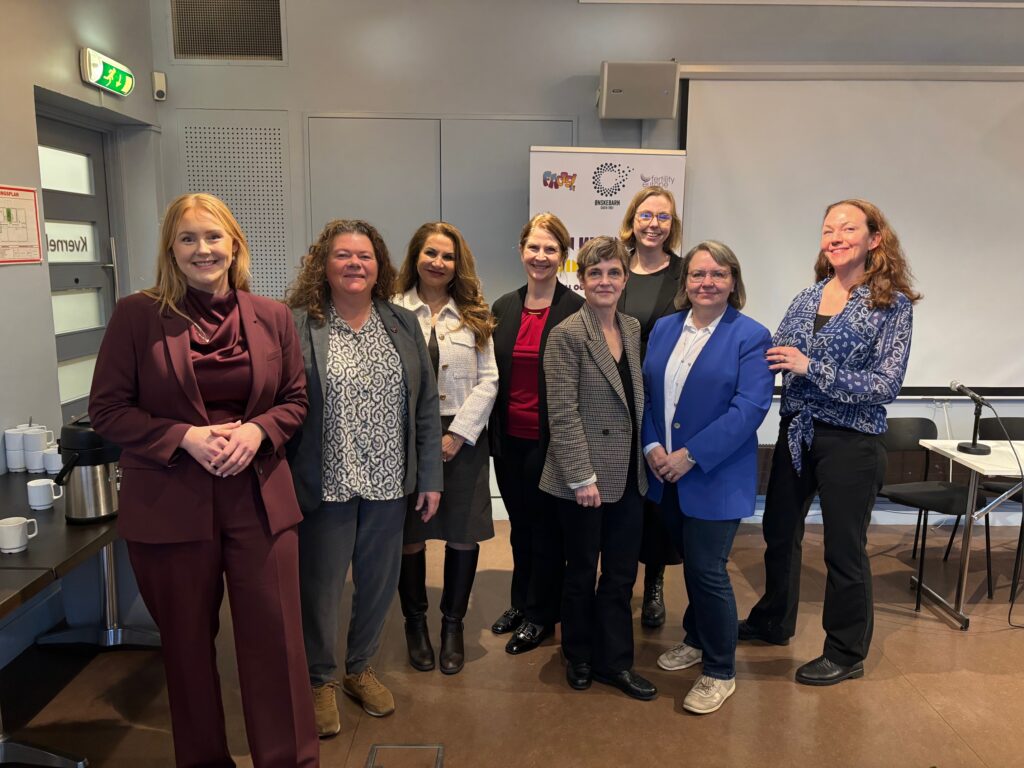
From left: Julia Brannstrøm Nordtug (Frp), Kathy Lie (Sv), Farahnaz Bahrami (AP), Margrete Raugstad (Ønskebarn), Lise B. Jakobsen (Ønskebarn), Rannveig Kaldager Hart (FHI), Satu Rautakallio-Hokkanen (Fertility Europe) and Inger Sønderland (Sex og Samfunn).
Ønskebarn, our Norwegian member association, brought together professionals, members and politicians for a breakfast meeting at the House of Literature in Oslo to discuss what young people actually know about their fertility. The event attracted wide interest and was attended by three members of parliament from the Health and Care Committee, a clear sign that fertility knowledge and declining birth rates are high on the political agenda.
The meeting created a lively arena for discussion, networking and knowledge exchange. Participants attended both in person and digitally, representing organisations such as the Biotechnology Council, health centres from across the country, politicians, students and healthcare professionals. For Ønskebarn, it was encouraging to see such strong engagement with the work they are doing.
The main goal of the breakfast meeting was to gain new insight into young people’s understanding of fertility and to discuss how they can best be reached with clear, accessible and reliable information. Another important topic was Norwegian data from the FActs! the game, which explores fertility knowledge among young people.
Bringing decision-makers into the conversation was particularly important for Ønskebarn. The closer the organisation is to policymakers, the stronger its voice becomes in highlighting the need for prevention, education and good fertility health in Norway.
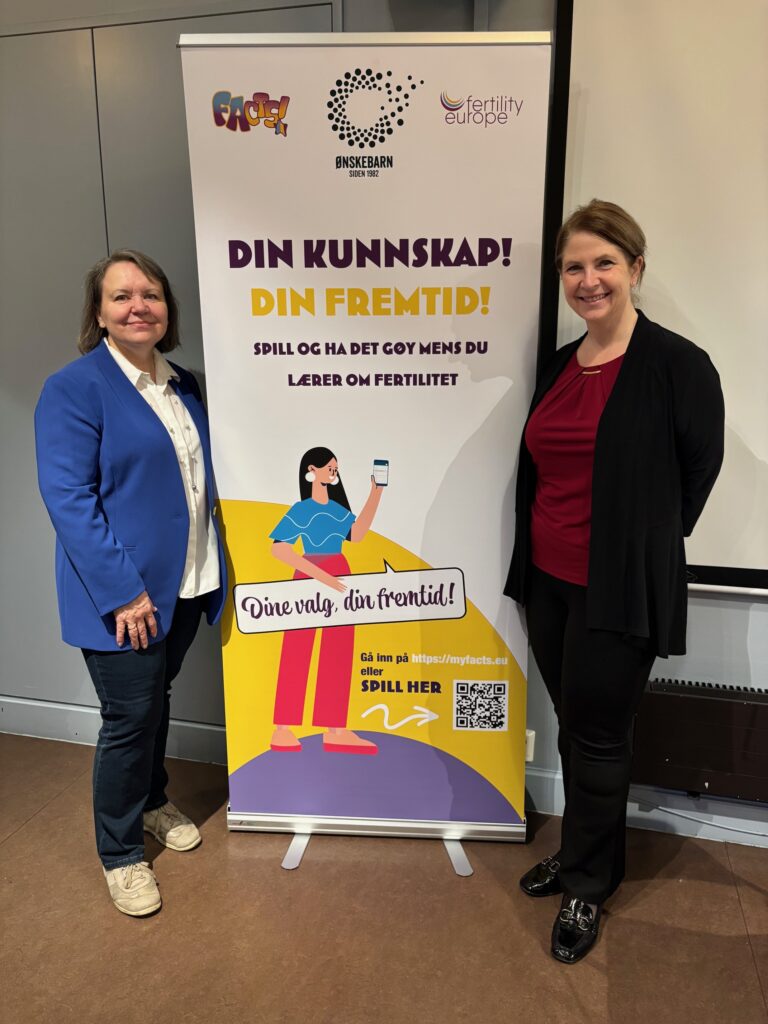
During the meeting, our General Director, Satu Rautakallio-Hokkanen, presented results from FActs! the game, which examined what Norwegian and European young people know about fertility, their bodies and their future ability to have children.
The results show clear knowledge gaps. Norwegian young people, like their peers elsewhere in Europe, have limited awareness of how fertility declines with age. Knowledge about sexually transmitted infections and their potential consequences for fertility is also lacking.
At the same time, there are positive findings. Most young people demonstrate good understanding of how lifestyle factors such as alcohol and drug use can affect fertility. This shows that young people are capable of understanding health information when it is communicated clearly and at the right time.
Satu argued that fertility education should be included in schools alongside sex education and contraception education. This is about giving young people real choices and the opportunity to plan their lives with accurate knowledge.
Too many people only learn about fertility when they are already in the middle of treatment, a process that is often expensive, demanding and emotionally challenging. If we want to prevent future generations from facing the same knowledge gaps as today’s adult patients, fertility education must be taken seriously and introduced early.
One of the speakers at the breakfast meeting was Rannveig Kaldager Hart, researcher at the Norwegian Institute of Public Health and chair of the government’s Birth Rate Committee. The committee has been tasked with investigating the reasons behind declining Norwegian birth rates and proposing measures to reverse this trend.
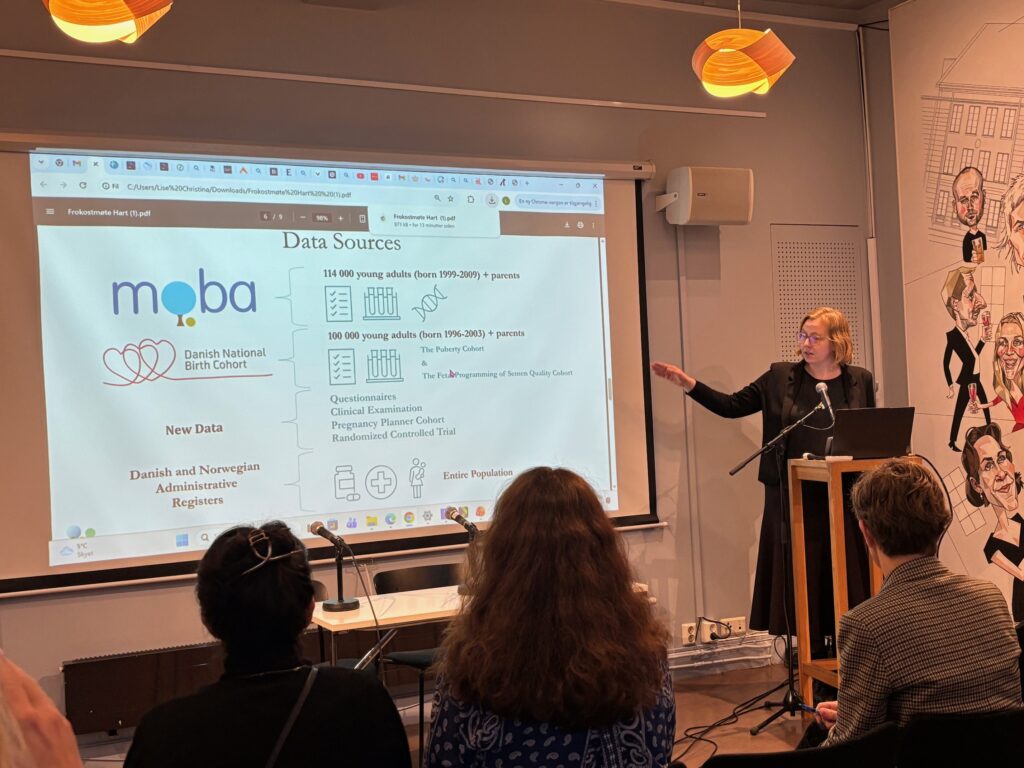
Hart explained that it is no longer parents in their late 20s who drive birth rates in Norway. Instead, this age group accounts for the steepest decline. Since 1990, birth rates among women aged 20–24 have dropped dramatically, and women aged 25–29 are now approaching the same birth levels as women in their late 30s.
Despite these trends, young Norwegians still want children. Most want two, many want three, and very few say they do not want children at all. However, the gap between desire and reality is growing.
Today, many women have their first child on average four years later than they would ideally like. More people are planning to have fewer children than before, and an increasing number never manage to realise their original plans.
Hart highlighted several reasons for this development: longer education, pressure to establish a career, financial insecurity and a desire for stability before having children. However, these rational choices often collide with biology, particularly women’s distinct fertility curve. A persistent challenge is that many still believe fertility lasts “forever”.
The Birth Rate Committee recommends that fertility and reproductive health education be included in secondary education. At the same time, professionals emphasise that the goal is not to scare young people or create expectations that they “must” have children.
Through a large EU-funded research project, the Norwegian Institute of Public Health is now studying fertility knowledge among young adults in Norway and Denmark. More than 2,500 young people will undergo clinical examinations and answer questionnaires. Preliminary findings, prior to publication, indicate that knowledge levels are lower and more uneven than expected. The committee will deliver its final report in February.
Inger Sønderland, clinic manager at Sex og Samfunn (Sex and Society), shared insights from their work with tens of thousands of young people through clinic visits, sex education and online chat services.
Until now, fertility has not been a regular topic in consultations or education. However, healthcare professionals increasingly encounter questions, concerns and misconceptions related to fertility. Typical questions include:
Young people also ask about sexually transmitted infections and the risk of reduced fertility. Some avoid contraception out of fear it will “damage fertility”, while at the same time having unprotected sex with multiple partners – a clear paradox driven by misinformation.
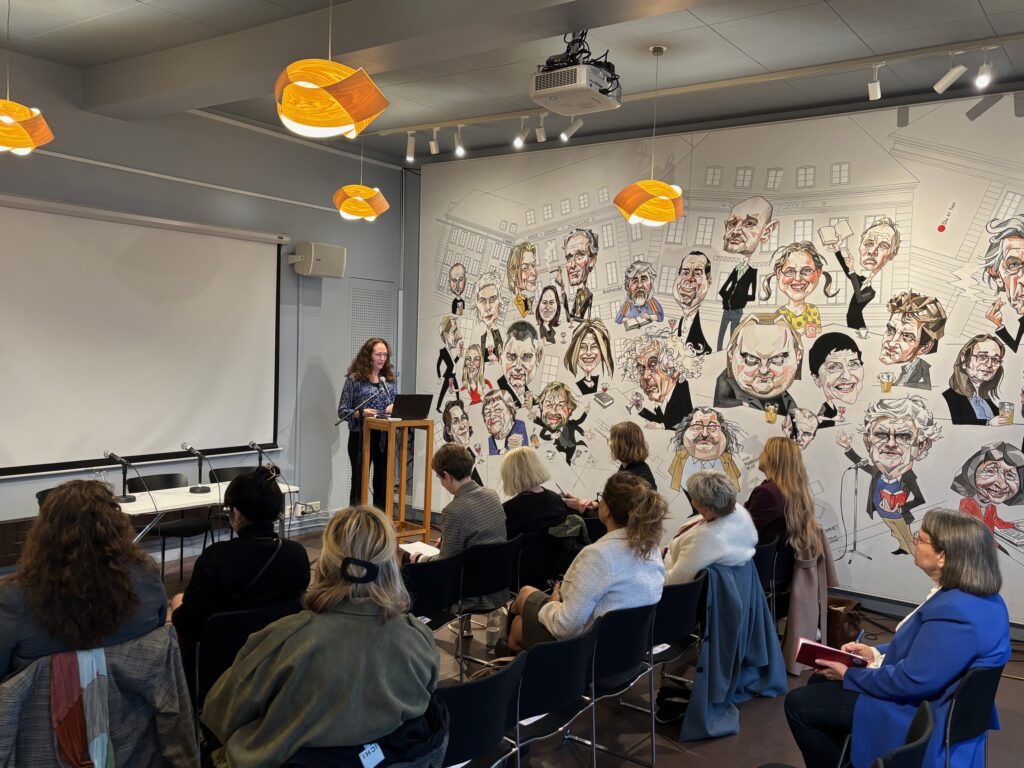
There is a wide variation in how young people relate to future parenthood. For some, the topic feels distant; for others, it is deeply important. Queer youth in particular report a need for clear, reliable information and safe spaces to talk about fertility options and challenges.
Misinformation is a major issue and often creates unnecessary anxiety. This underlines the need for professionals to address fertility proactively, just as they do with consent, sexuality, violence and sexually transmitted infections.
Health professionals at Sex og Samfunn note that young people are often grateful when adults open up the conversation. A simple question such as “Is fertility something you wonder about?” can be enough to clarify needs, reassure young people and correct misunderstandings.
The breakfast meeting demonstrated strong interest across sectors and gave Ønskebarn renewed motivation. Seeing professionals, politicians and young people engage in meaningful dialogue confirmed the importance of continuing this work.
Fertility knowledge is not about pressure or fear. It is about empowerment, informed choices and ensuring that more people can have the children they want, when they want them.
Copyright © 2026. Fertility Europe. All rights reserved.
Design & Development: Plavi Pixel 2025.
Join our newsletter to receive heartfelt stories, expert insights, and updates from Fertility Europe.