

Reading time: min
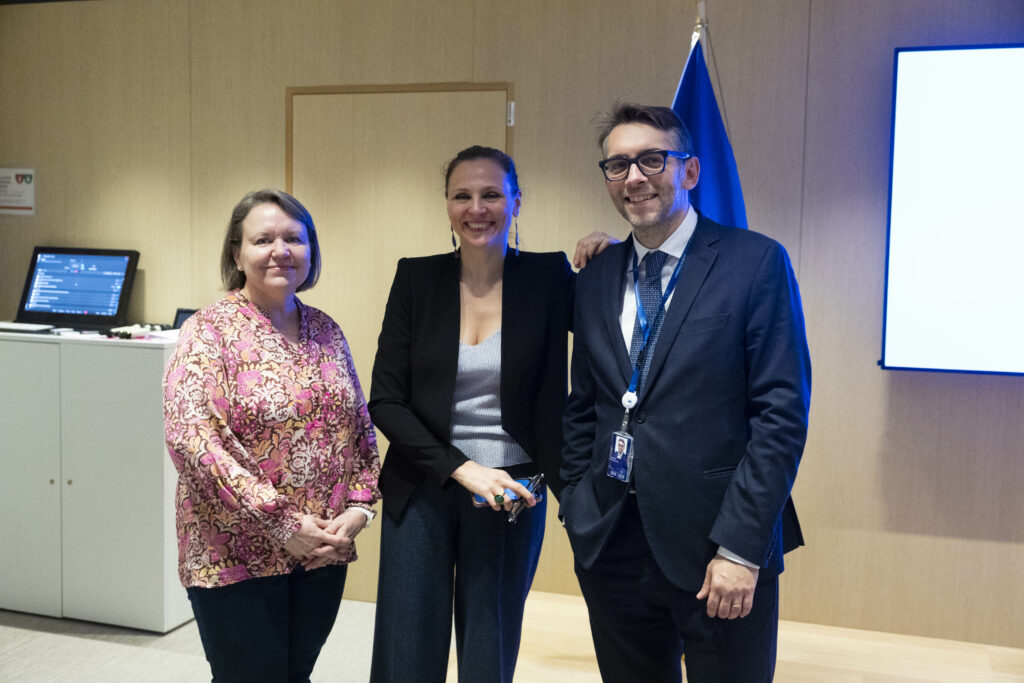
Eleonora Voltolina, founder of the Why Wait Agenda, together with Italian Member of the European Parliament Pierfrancesco Maran, convened a high-level event titled “The Real Fertility Crisis: Fertility Policy and Practice at Stake.” Hosted at the European Parliament by MEP Maran, the discussion brought together policymakers, researchers, and representatives from civil society to address one of Europe’s most pressing demographic challenges. Fertility Europe was represented by our General Director, Satu Rautakallio-Hokkanen, who was one of the invited speakers.
The event formed part of the Why Wait Agenda’s ongoing work following the 2024 launch of its Pledge to Close the Fertility Gap, which several Members of the European Parliament have since signed. The initiative focuses not on fertility decline alone, but on the growing gap between people’s desired and actual number of children, and on the conditions that prevent individuals from realising their family aspirations.
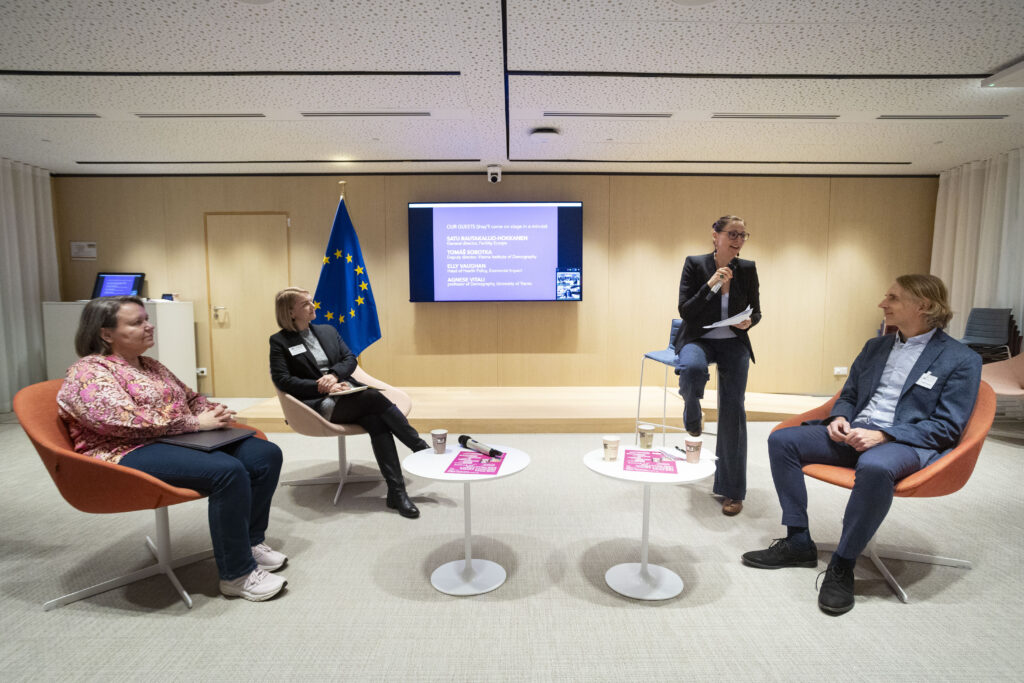
At the core of the discussion was a shared reframing of the fertility debate. Rather than focusing narrowly on falling birth rates, speakers emphasised the fertility gap, the disconnect between reproductive intentions and outcomes.
Two recent publications provided the analytical backbone of the event:
Both publications align with the Why Wait Agenda’s position that fertility challenges must be understood through the lens of choice, opportunity, and structural constraints.
Tomáš Sobotka from the Vienna Institute of Demography described a profound transformation in fertility patterns across developed societies. Many countries are experiencing historically low fertility levels after rapid declines, challenging long-held assumptions that fertility will naturally rebound.
A key concern is the rise of ambiguous and unstable fertility preferences. While many people still wish to have children, intentions are increasingly postponed, revised downward, or abandoned altogether due to economic insecurity, housing shortages, work–family conflicts, gender inequality, and political and social uncertainty.
Sobotka emphasised that sustained very low fertility may become the norm rather than a temporary phase, with far-reaching consequences for population ageing, labour markets, social security systems, and long-term economic development. His conclusion underscored the need to rethink demographic projections and recognise the complex structural forces shaping reproductive behaviour.
Elly Vaughan presented findings from the Economist Impact toolkit, examining how European countries are responding to persistent low fertility through policy design and implementation.
While many governments have expanded family-related policies, such as childcare provision, parental leave, and financial support, their effectiveness varies widely. Successful approaches tend to combine accessible childcare, gender-equal labour markets, and stable institutional support, rather than relying solely on financial incentives.
Vaughan highlighted the persistent gap between policy intentions and lived experience. Administrative complexity, uneven regional coverage, and rising housing and education costs often dilute policy impact. The presentation concluded that fertility policies can help remove barriers, but rarely reverse low fertility trends on their own without long-term, integrated social support.
Agnese Vitali of UNFPA reframed the fertility debate by arguing that the real crisis is neither low nor high fertility, but the lack of reproductive agency. Across all income levels, many people are unable to achieve their desired family size, whether that means having children, having more children, or avoiding unintended pregnancies.
Drawing on UNFPA’s State of World Population 2025, Vitali highlighted how economic insecurity, gender inequality, limited access to reproductive health services, unstable partnerships, conflict, and climate stress constrain individual choices.
She stressed that fertility challenges should not be addressed through coercive or target-driven population policies. Instead, sustainable responses must prioritise sexual and reproductive health services, gender equality, education, decent work, and social protection—placing human rights and individual choice at the centre of demographic policy.
Our General Director, Satu Rautakallio-Hokkanen, presented the work of Fertility Europe and examined Europe’s fertility challenges through a broader lens, framing fertility as a public health, social, and human rights issue.
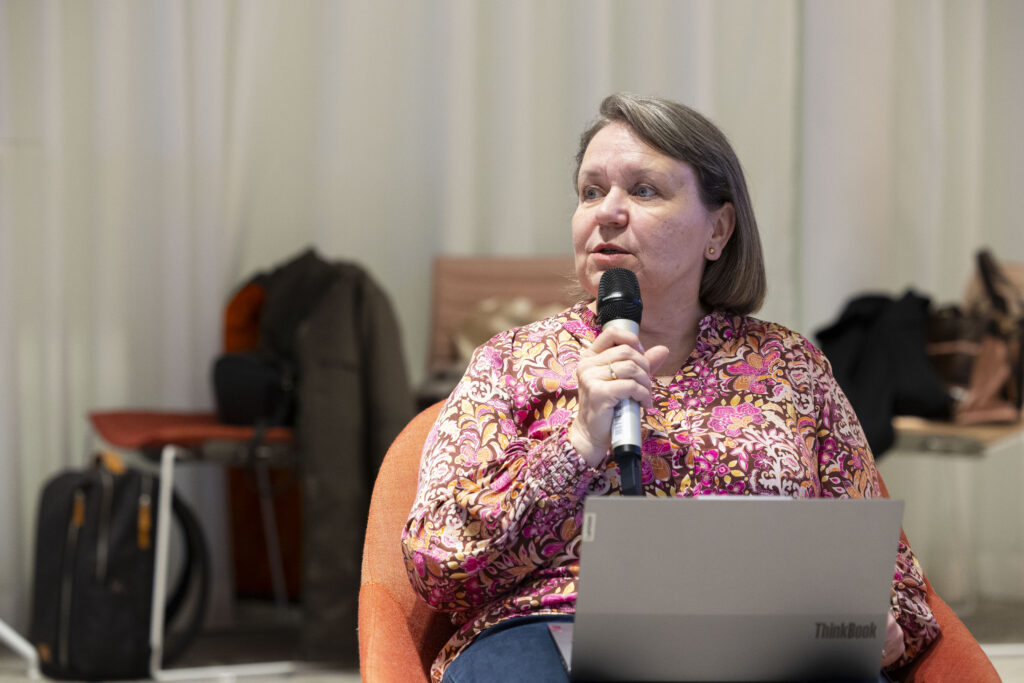
Her presentation highlighted the millions of people affected by infertility across Europe and the persistent gaps in access to fertility education, prevention, and care. Despite political concern over population decline, many individuals face financial, geographic, and regulatory barriers to fertility treatment, alongside significant psychological and social burdens.
Satu emphasised the importance of recognising fertility care as an essential part of reproductive healthcare and highlighted the role of patient advocacy and civil society in shaping inclusive, evidence-based policies. She called for stronger European cooperation, improved data collection, and life-course approaches that support individuals and families at every stage.
The discussion generated strong engagement from the audience, with lively questions and debate following the presentations. A clear consensus emerged: Europe’s fertility gap must be taken seriously, and action cannot be delayed.
Participants agreed that effective fertility policy requires more than short-term incentives or demographic targets. It demands coordinated, long-term investment in social infrastructure, gender equality, reproductive healthcare, and economic security, so that people across Europe can genuinely realise their reproductive intentions.
As the Why Wait Agenda continues its work with Members of the European Parliament, the event reinforced a shared message: closing the fertility gap is not only a demographic necessity, but a matter of choice, dignity, and social justice.
Copyright © 2026. Fertility Europe. All rights reserved.
Design & Development: Plavi Pixel 2025.
Join our newsletter to receive heartfelt stories, expert insights, and updates from Fertility Europe.